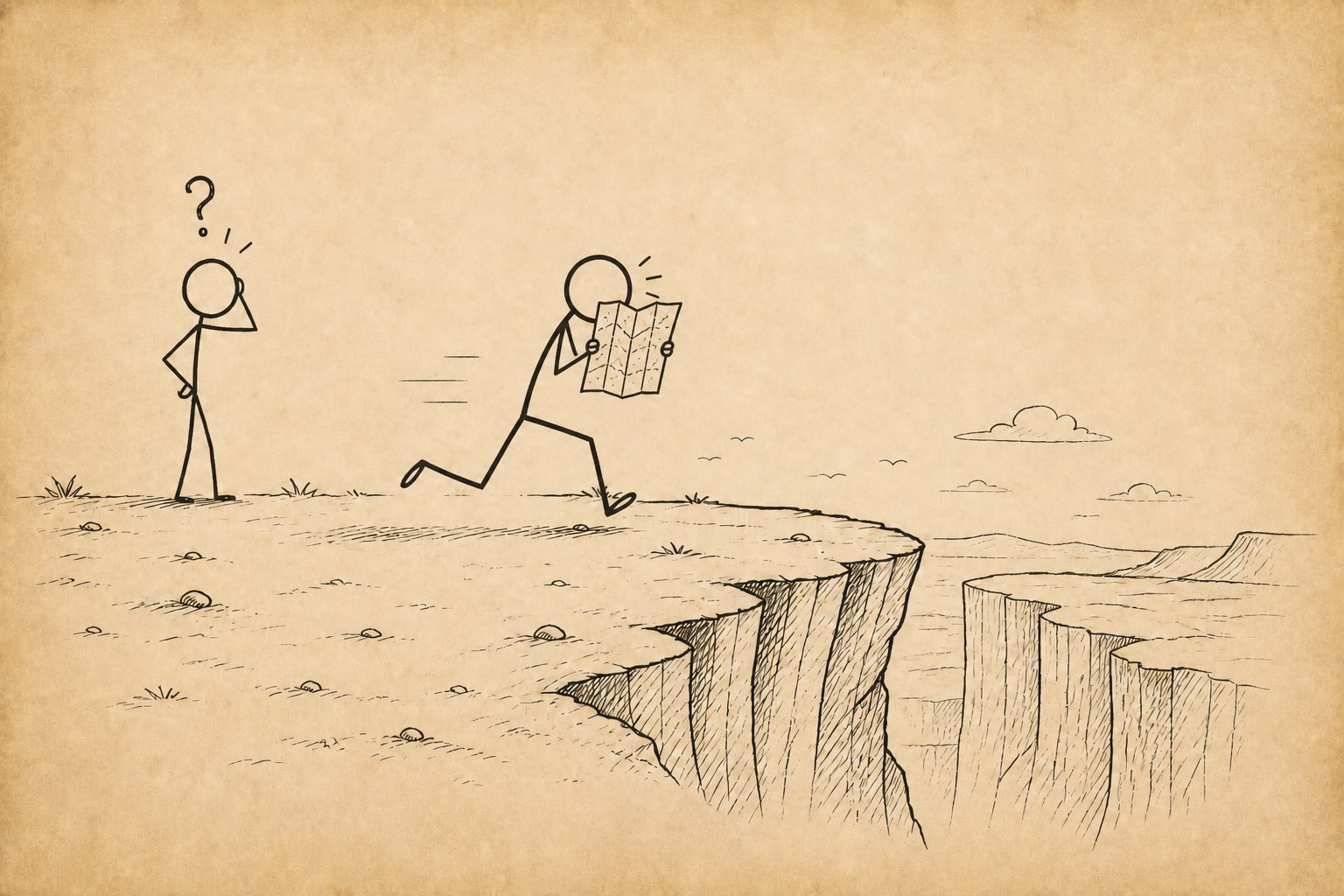
When the map and the terrain disagree, trust the terrain
A lot of the current AI conversation still gets framed as replacement. Will AI replace analysts? Will it replace decision makers? Will it eventually do the work of entire teams? I think that framing misses what is actually happening.
AI is becoming very good at processing information. It can summarize a long document, compare alternatives, identify patterns, and draft a reasonable first version of a plan. In many cases, that is enough to get someone 50 percent of the way there. That is not small. For a finance team, a strategy group, or an operator trying to move quickly, that first step can save real time. But the last mile is where the real decisions live.
The issue is not whether AI can explain the data. Often, it can. The harder question is whether the explanation connects to the objective, the timing, the tradeoffs, and the consequences inside a specific organization. One good example of this is the way dashboards are commonly used.
Most leadership teams have some version of a performance dashboard. It may live in Excel, a BI tool, or some internal ad-hoc system. The point is usually straightforward: show the team whether performance is above target, below target, and in what directions the KPIs are moving.
Used well, a dashboard helps tell the story behind performance (the good, the bad, and the ugly). It gives leaders a shared view of what is happening and creates a better conversation about what to do next. Used poorly, it becomes a scoreboard without a game plan.
That is when leadership meetings become a reaction to presented numbers. We like this number. We do not like that number. This one is green. That one is red. Someone asks why it moved, someone else fails to explain a business driver, and the conversation often stops there or run out of time. That is not leadership. That is reading.
The valuable conversation starts after the number is understood. What changed? Why did it change? Does it matter now, or is it just noise? What lever can we actually pull? What happens if we pull it? What happens two steps later? That is the part where AI still has limits. The part that matters.
A model can produce a list of possible actions. It can even list potential risks, expected outcomes or externalities. But if the prompt is general, the answer will usually be general too. It may include a long list of things that could matter somewhere, without knowing which ones matter here. And in many cases leadership cannot run the same experiment more than once.
Humans know the organization. Leaders know the personalities, the constraints, the history, the incentives, the customer promises, the political reality, and the timing. They know which issue is a real risk and which one is just noise wearing a costume. That context matters because decisions create consequences beyond each metric.
You can improve a KPI and still cause great damage to your brand. You can reduce cost and still create operational fragility. You can accelerate a timeline and still overload the team that has to execute it. You can make a dashboard look better while making the organization less effective.
AI can help surface the map. It can make the facts easier to see. It can shorten the path from raw information to a useful first draft. But leaders still have to know the terrain.
The future of judgment is not about ignoring AI. It is about using AI to raise the baseline while becoming more disciplined about the part that remains human: asking better questions, understanding consequences, and choosing the action that fits the real situation.
AI may make information easier to process. It does not remove the need to think for yourself.